



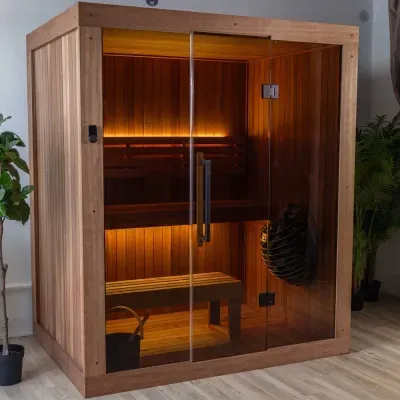
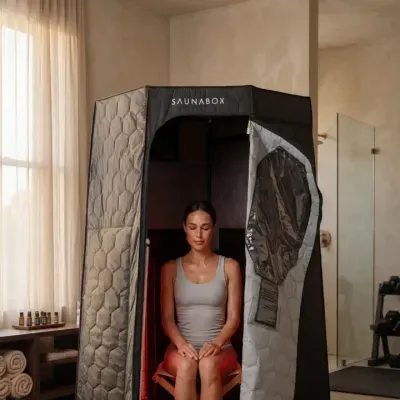

Infrared vs traditional sauna: how they differ on heat, wiring, price and research

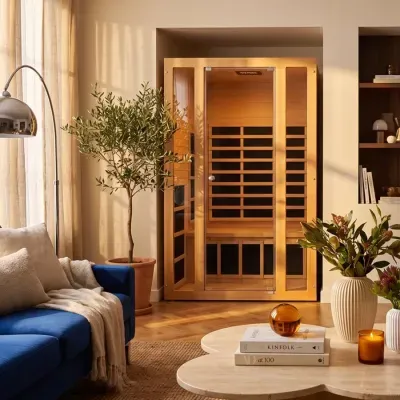
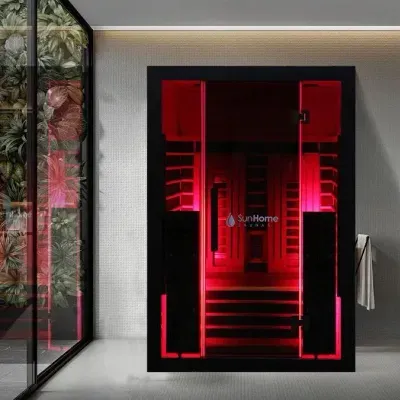
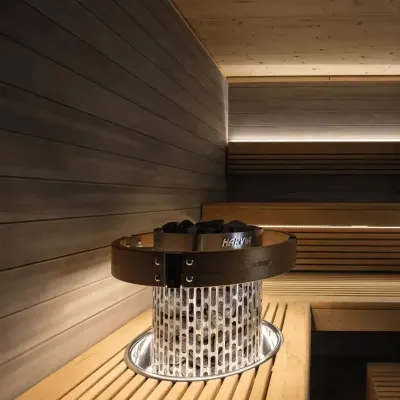
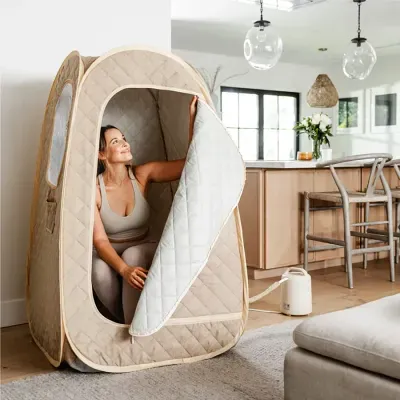
A traditional sauna heats the air with a stove to 176–212°F, and you can pour water on the stones for steam. An infrared sauna heats your body with panels while the air stays around 110–135°F. At home, the practical differences are wiring (most infrared cabins in our database run on 120 V, most traditional ones need 240 V), heat-up time and price. On research, traditional saunas have more and larger studies; infrared research is mostly in hospital patients, and I found no trial comparing the two directly. Steam, blankets, portable tents and the rest are side by side in types of saunas.
At a glance
| Infrared | Traditional | |
|---|---|---|
| How it heats | Panels (mostly carbon) warm your body directly | An electric or wood stove heats the air and stones |
| Air temperature | 110–135°F in use (Cleveland Clinic); brands list maximums of 140–170 °F | 176–212°F (Finnish norm); brands list maximums of 180–230 °F |
| Humidity and steam | Dry; no water on the heaters | 10–20% humidity, more when you pour water on the stones |
| Heat-up time, per brands | 30 min (4 models publish it) | 60 min (3 models publish it) |
| Power | 47 of 56 with known specs run on 120 V | 10 of 11 with known specs need 240 V |
| Price, indoor | $2,199 to $10,500, median $5,999 | $4,172 to $17,195, median $7,047 |
| Price, outdoor | $5,389 to $18,999, median $9,389 | $4,037 to $43,990, median $6,845, barrels and cabins |
| Research | Mostly Japanese Waon therapy in heart failure patients | Large Finnish cohort (association) plus small trials |
How each one heats you
In a traditional sauna, a stove heats rocks and air, and the hot air heats you from the outside in. Pour a ladle of water on the stones and a burst of steam makes the room feel hotter for a minute. In an infrared sauna, emitters on the walls, floor and bench send infrared energy straight at you; the air warms up more slowly and stays cooler. Labels like "far infrared" and "full spectrum" describe which emitters a cabin has: what an infrared sauna is explains them.
Temperature and how it feels
Traditional Finnish saunas run at about 176–212°F with 10–20% humidity (Laukkanen and Kunutsor, 2024). Cleveland Clinic gives 110–135°F for infrared and 150–195°F for traditional, and its expert says infrared saunas "can definitely be much more comfortable for people while delivering the same sort of benefits" (Cleveland Clinic). That's an opinion, not a study result; I found no trial comparing the two head to head.
Lower air temperature doesn't mean you stay cool. In a small 2022 trial of 10 women, 45 minutes in an infrared sauna raised body temperature more than moderate cycling. If you like the blast of heat and steam, infrared will feel tame. If 190°F air makes you want to leave after five minutes, infrared lets you stay longer at a lower air temperature.
Wiring, space and install
Wiring is the biggest practical difference. Of the infrared cabins with published power specs, 26 plug into a standard 15 A outlet and 21 need a dedicated 120 V circuit of 20 A or more; 9 need 240 V. Traditional saunas are the reverse: 10 of 11 with known specs need 240 V for the heater, usually hard-wired. Almost Heaven doesn't confirm the voltage for its indoor models, so check before you order.
Either way, check with a licensed electrician before the sauna arrives; whether you need a permit depends on your city, so check with your local building department. For a backyard, see outdoor infrared saunas and outdoor saunas.
What each costs to buy and run
Indoor infrared cabins in our database cost $2,199 to $10,500, with a median of $5,999; indoor traditional saunas cost $4,172 to $17,195, median $7,047. Add an electrician for a 240 V line on most traditional saunas. One caveat on the infrared median: Golden Designs, which makes Dynamic and Maxxus cabins, lists prices on its own site that dealers and Costco often undercut, so many infrared cabins sell for less than the list price used here.
Running cost depends on the heater's power, how long you use it and your electricity rate. Infrared cabins in our database draw 1.4–3.9 kW per the brands; traditional heaters are rated 1.9–8 kW. The worked math is on sauna cost.
Which has more research behind it
Traditional. The big numbers come from the Finnish Kuopio cohort: men who used a sauna four to seven times a week had lower rates of fatal heart disease and death than once-a-week users (2,315 men, about 20 years). That's an association in one population. The best trial is small: adding 15 minutes of sauna after exercise lowered systolic blood pressure by 8 mmHg more than exercise alone in 47 adults.
Infrared. Most studies are Japanese Waon therapy in heart failure patients: 15 minutes at 140°F plus 30 minutes of rest. A 2018 meta-analysis found short-term improvements in heart-function markers, and a trial of 149 hospitalized patients found better walking distance. A 2009 review called the evidence for infrared health claims limited.
A 2024 review by the Finnish group says Finnish saunas "have the most consistent and robust evidence" among heat therapies (Laukkanen and Kunutsor). Keep in mind who wrote it. I found no trial that put people in one or the other and compared outcomes, so the fair summary is that traditional saunas are better studied, not that they're healthier. Details: sauna benefits and infrared sauna benefits. None of this is medical advice (medical disclaimer).
Side by side: two pairs
Two pairs at similar sizes, so you can see the trade-offs on real models:
| Model | Type | Seats | Max temperature | Power | Price |
|---|---|---|---|---|---|
| Dynamic Saunas Barcelona 1–2 Person | Infrared | 1–2 | 140°F | 120 V / 15 A, no GFCI, plug and play; dedicated outlet recommended | $3,499 |
| Almost Heaven Madison 2-3 Person Indoor Sauna | Traditional | 2–3 | 180°F | 6 kW heater (Harvia KIP); voltage and amperage not confirmed | $5,160 |
| Clearlight Sanctuary 2 Full Spectrum + Red Light Therapy | Infrared, full spectrum | 2 | not published | 120 V, 2260 W, 18.83 A; 20 A outlet, NEMA 5-20P | $7,299 |
| Redwood Outdoors Alcove Indoor Sauna - 2 Person | Traditional | 2 | 194°F | 240 V heater (amperage not stated) | $4,299 |
In the budget pair, the Dynamic Barcelona plugs into a regular outlet and costs less; the Almost Heaven Madison reaches a much higher temperature with a 6 kW heater, but its voltage and amperage aren't confirmed on the listing. In the mid-range pair, the Clearlight Sanctuary 2 adds full-spectrum emitters at a much higher price than the Redwood Outdoors Alcove, which needs 240 V.
Outdoors: infrared or traditional?
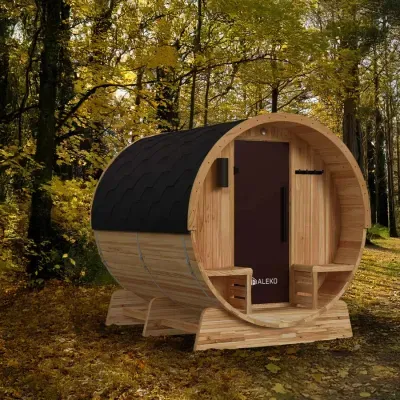
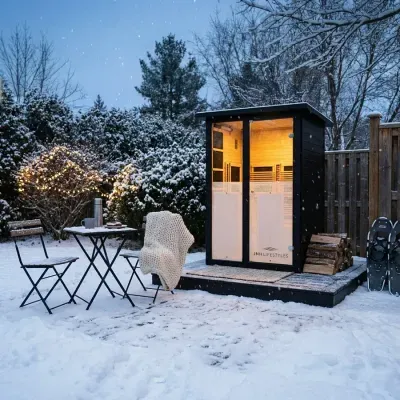
Outside, the choice looks different. Our database has 25 outdoor traditional saunas, barrels and cabins, against 7 outdoor infrared models. Outdoor traditional saunas cost $4,037 to $43,990 (median $6,845); outdoor infrared ones $5,389 to $18,999 (median $9,389).
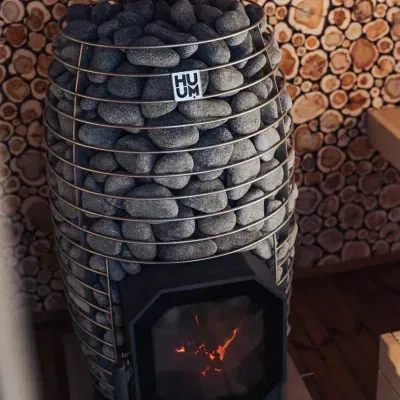
The bigger difference is fuel. Only a traditional sauna can burn wood: 8 of the outdoor models list a wood-burning stove as an option, and the database has 8 wood stoves on their own. A wood stove needs a chimney and clearances from the stove's manual, but no 240 V line to the backyard. An outdoor infrared cabin always needs a circuit run to it; 4 of 7 with known specs run on 120 V. Compare on outdoor saunas and outdoor infrared saunas.
Where a steam room fits
A steam room is a third option: cooler than either sauna in air temperature but near 100% humidity, heated by a steam generator in a sealed room. It's compared with dry saunas on sauna vs steam room.
Downsides of each
Infrared: no steam and no blast of heat; fewer studies, mostly in patients; "low EMF" figures come only from brands, often without the distance they were measured at (see infrared sauna safety); and cabin specs sometimes contradict themselves.
Traditional: a 240 V line on most models; a longer heat-up; and a hot stove you can burn yourself on. A quarter of the burns treated at one Finnish burn center came from saunas (Papp, 2002). The cautions about alcohol, being alone and standing up too fast apply to both.
Hybrids: both in one cabin
A few saunas have a stove and infrared emitters, so you can switch between them. They cost more, and most need 240 V:
- Golden Designs Carinthia 3 Person Hybrid: Infrared plus electric stove (hybrid), stove 8.0 kW or full-spectrum IR: 8 emitters (2 PureTech carbon panels, far IR + 6 near-infrared elements); $8,999
- Golden Designs Gargellen 5 Person Hybrid: Infrared plus electric stove (hybrid), stove 8.0 kW or full-spectrum IR: 10 emitters (4 PureTech carbon panels, far IR + 6 near-infrared elements); $9,999
- Golden Designs Nora 2 Person Hybrid: Infrared plus electric stove (hybrid), stove 6.0 kW or full-spectrum IR: 6 emitters (2 PureTech carbon panels, far IR + 4 near-infrared elements); $18,999
- Finnmark Designs FD-4 Trinity Infrared & Steam Sauna Combo: Infrared plus electric stove, Spectrum Plus emitters and Harvia Vega Compact 1.9 kW; $7,795
- Finnmark Designs FD-5 Trinity XL Infrared & Steam Sauna Combo: Infrared plus electric stove, Spectrum Plus emitters and Harvia KIP45B 4.5 kW; $8,995
Infrared sauna vs red light therapy
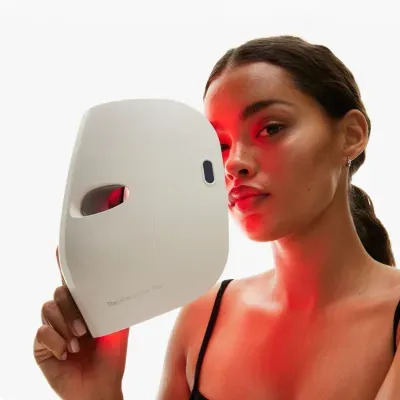
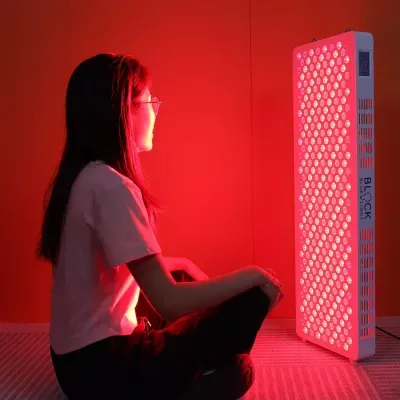
Different things. An infrared sauna heats you; red light therapy shines red and near-infrared LEDs at set wavelengths on your skin, with little heat. Some cabins add LED panels: red light saunas. What LED red light has been studied for is on red light therapy benefits.
Which to choose
Choose infrared if you want to plug into a regular outlet, prefer lower air temperatures or have a smaller budget: infrared saunas. Choose traditional if you want steam, high heat and the setup most of the research is based on, and you can run a 240 V line: traditional saunas. Prices for every type are on sauna cost.
Questions people ask
What is the downside to an infrared sauna?
No steam, lower heat, and less research, most of it in hospital patients. EMF figures come only from brands. See "downsides of each" above.
Which is healthier, infrared or traditional sauna?
No trial has compared them directly. Traditional saunas have more research, mostly observational; infrared research is mostly in heart failure patients. "Better studied" isn't the same as "healthier."
Is an infrared sauna cheaper to run than a traditional one?
Usually, per hour: infrared cabins in our database draw 1.4–3.9 kW, while traditional heaters are rated 1.9–8 kW. Heat-up time adds to both. The formula is on sauna cost.
Why not shower after an infrared sauna?
I found no study on showering after a sauna, either way. Check your sauna's manual for the maker's advice.