

What is an infrared sauna and how does it work?

An infrared sauna is a cabin, blanket or dome with heaters that warm your body directly with infrared light, while the air stays cooler than in a traditional sauna: 110–135°F, against 150–195°F, per Cleveland Clinic. Infrared is the part of the spectrum just past visible red; FDA rules for infrared heating lamps describe it as roughly 700 to 50,000 nanometers. "Far," "near" and "full spectrum" describe which heaters a sauna has.
How an infrared sauna heats you
A traditional sauna heats the air with a stove, and the hot air heats you. An infrared sauna skips most of that step: panels on the walls, floor or bench give off infrared energy that warms your skin and anything else it reaches, so the air temperature stays lower. Cleveland Clinic puts infrared cabins at 110–135°F and traditional saunas at 150–195°F (Cleveland Clinic).
The FDA's rule for infrared heating lamps describes devices that emit "energy at infrared frequencies (approximately 700 nanometers to 50,000 nanometers) to provide topical heating" (21 CFR 890.5500). That's a wide band, and saunas use different parts of it. How it compares with a stove-heated sauna on wiring, cost and research is on infrared vs traditional sauna.
Far, near and full spectrum: what the labels mean
These labels describe the heaters, not a standard. Here's how the 73 infrared saunas in our database (indoor and outdoor cabins, plus a few red light models) describe themselves:
| Label | What brands put inside | Cabins | Example |
|---|---|---|---|
| Far infrared | Carbon panels on the walls, often more at the calves and floor | 31 | Dynamic Saunas Barcelona 1–2 Person: "Far infrared, 6 carbon panels (Low EMF)" |
| Full spectrum | Far infrared panels plus near or mid infrared lamps or emitters | 32 | Health Mate Enrich 2: "Full-spectrum infrared (near, mid, far); Tecoloy Dual-Wave (far + mid IR) on walls and under the bench, TruInfra far infrared (floor, lower back) and NIR LED panel; 8 heaters per page text; recommended preheat 20–30 min" |
| Separate bands | Far and mid infrared heaters that can run on their own, plus LED panels | 2 | Sunlighten mPulse Believe: "Far and mid infrared plus red/NIR LED panels; 6 far + 5 mid-infrared heaters, 4 LED panels (SoloCarbon carbon, CELLIANT covers)" |
| With red light | Infrared heaters plus red and near-infrared LED panels | 16 | Sun Home Luminar 5-Person Outdoor Full-Spectrum + Red Light Therapy Add-on: "10 full spectrum + 5 far infrared (calves, floor); red light optional" |
A cabin can carry more than one label, so the rows overlap. The finding that matters: only 6 of the 73 publish any wavelengths at all, and those are for their red and near-infrared LED panels. None publishes the wavelengths of its infrared heaters. "Full spectrum" doesn't name a range; it names a mix of heaters, and the mix differs from brand to brand (compare JNH Lifestyles Tosi 1-Person Hemlock with Health Mate Enrich 2). I found no study comparing far-infrared and full-spectrum cabins, so I can't tell you one works better. Full-spectrum models are compared on full spectrum infrared saunas.
Carbon vs ceramic heaters
In our database, 44 of 73 infrared saunas name carbon heaters, alone or with near-infrared lamps or LED panels, and one (Therasage's aspen cabin) lists ceramic heaters; the rest don't name the heater material. No brand publishes heater output in a form you could compare across brands, so I don't rank heater types.
How hot does it get?
Cabins that publish a maximum list 140°F to 170°F; 36 cabins don't publish one at all. Specs can conflict even on one page: the JNH Lifestyles Joyous+ 2-Person lists "up to 170°F," while its FAQ says the control panel won't go above 140°F. Most of the time you'll sit well below the maximum. Cleveland Clinic's range of 110–135°F is a fair guide, and session advice is on how long to stay in a sauna.
Cabins, blankets, domes and outdoor models
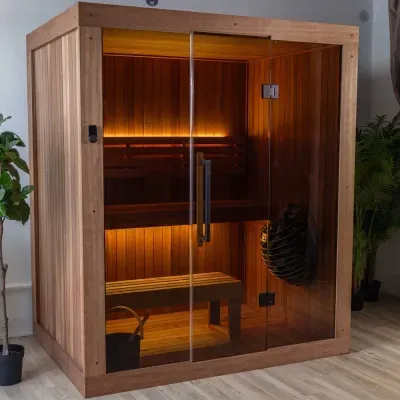
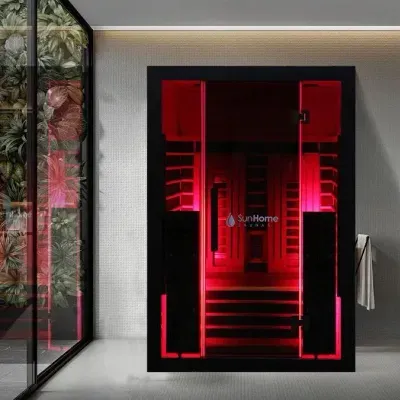
- Indoor cabins, one to four seats, mostly on a regular or dedicated 120 V outlet: infrared saunas.
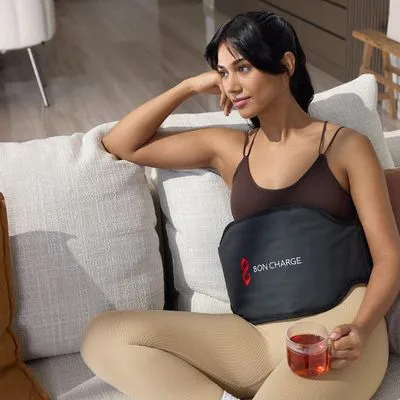
- Blankets, a heated sleeping-bag shape you lie in (12 models in our database): sauna blankets.
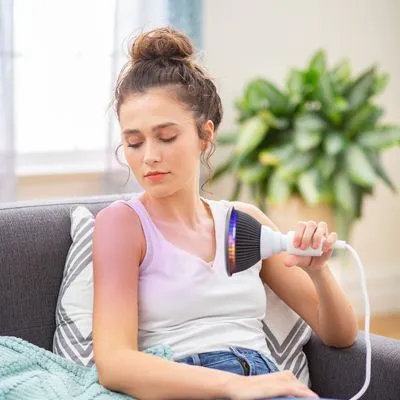
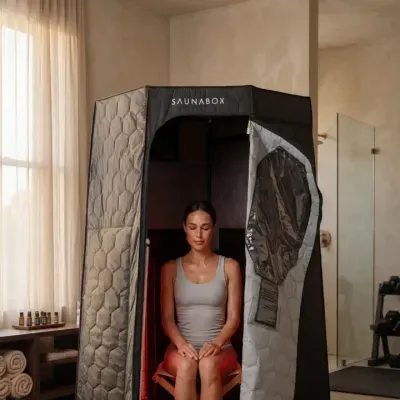
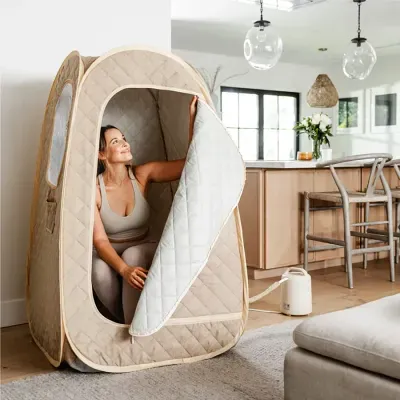
- Domes and tents, portable shells you sit or lie in (8 models): portable saunas.
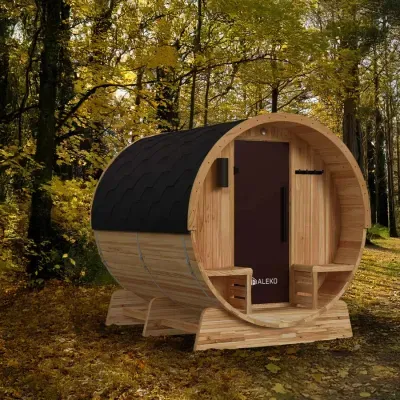
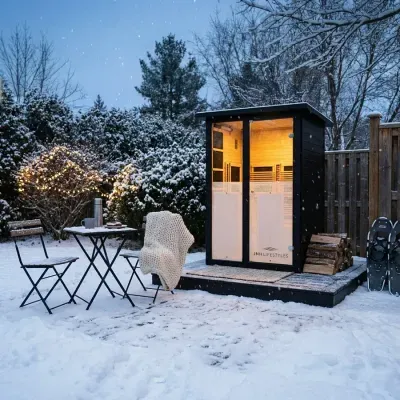
- Outdoor infrared cabins (7 models): outdoor infrared saunas.
Is an infrared sauna the same as red light therapy?
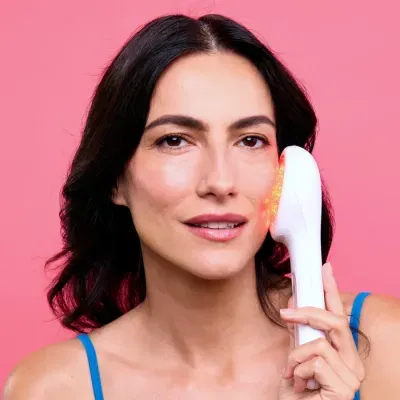
No. An infrared sauna is about heat. Red light therapy uses red and near-infrared LEDs at set wavelengths, aimed at the skin at a set dose, with little heat. Some cabins now include LED panels too, and those are on red light saunas; what LED red light has been studied for is on red light therapy benefits.
What it does to your body
You heat up even though the air is cooler. In a small 2022 trial of 10 women, 45 minutes in an infrared sauna raised body temperature by about 1.9°F over rest, more than moderate cycling did. Across 16 pooled studies of infrared and Finnish saunas, heart rate rose about 18 beats a minute and systolic blood pressure dipped about 5.5 mmHg right after a session. What longer use has been studied for, mostly in hospital patients, is on infrared sauna benefits; the risks are on are infrared saunas safe.
Questions people ask
What does an infrared sauna do to your body?
It raises your body temperature and heart rate and makes you sweat, and blood pressure dips for a while afterward. Longer-term effects have mostly been studied in hospital patients; see infrared sauna benefits.
What are the downsides of infrared saunas?
Overheating, dizziness when you stand up (2006 review) and dehydration (2003 study). Alcohol makes all of them worse. More on infrared sauna safety.
Do infrared saunas burn fat?
No study shows it. The weight you lose is water. A 2009 review rated the evidence on obesity as weak, from a single study (Beever 2009), and the FDA made one brand, Therasage, drop calorie claims (recall Z-1539-2015).