




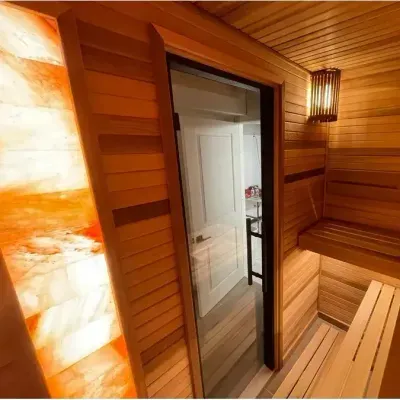
Infrared sauna benefits: what's been studied and what's just marketing

Most infrared sauna research is a Japanese hospital routine called Waon therapy (15 minutes at 140°F, then 30 minutes resting under a blanket) given to patients with heart failure. In them, a few weeks of sessions improved some heart measures in the short term. In healthy people the studies are tiny. A 2009 review called the evidence limited and found it argued against cholesterol claims. Detox and calorie-burning claims aren't supported.
The evidence at a glance
Brand pages list ten or more benefits, usually without a single study. The table below lists the studies instead, and the column that matters most is who was studied: most were patients in hospital care, not healthy people at home. Levels follow the rule on how we research.
| Claim | Study | Who was studied | Routine | What it found | Evidence |
|---|---|---|---|---|---|
| Heart function in heart failure | Meta-analysis, 2018 | Patients: heart failure, 7 studies pooled | 140°F, 15 min + 30 min rest, 5 times a week, 2–4 weeks | Short-term improvement in heart-function markers; blood pressure unchanged | Moderate, in patients |
| Walking distance in heart failure | Randomized trial, 2016 | Patients: 149 hospitalized, advanced heart failure | Waon routine for 10 days | Better 6-minute walk and symptom class; the main blood marker didn't differ | Moderate, in patients |
| Blood vessel function | Study without randomization, 2001 | Patients: 25 men with heart risk factors | 140°F, 15 min daily, 2 weeks | Artery widening (FMD) rose from 4.0% to 5.8% | Limited |
| Blood pressure right after a session | Meta-analysis, 16 studies | Mixed: infrared and Finnish saunas, patients and healthy | Single sessions | Temporary drop of about 5.5 mmHg systolic; heart rate up about 18 beats a minute | Moderate |
| Pain and stiffness in arthritis | Pilot study, 2009 | Patients: 34 with rheumatoid arthritis or ankylosing spondylitis | Sessions over 4 weeks | Less pain and stiffness during sessions; over 4 weeks the change wasn't significant | Limited |
| Mood in mild depression | Randomized trial, 2005 | Patients: 28 inpatients with mild depression | 4 weeks of sessions | Better appetite and fewer physical complaints | Limited, in patients |
| Exercise-like effects | Crossover trial, 2022 | Healthy: 10 women | 45 minutes, once | Body temperature rose more than with moderate cycling; blood pressure and artery stiffness didn't change | Limited |
| Chronic pain, chronic fatigue, obesity | Review, 2009 | Mixed | — | Each claim rests on a single study: "fair" for pain, "weak" for fatigue and obesity | Limited |
| Lower cholesterol | Review, 2009 | Mixed | — | "Consistent fair evidence to refute" | None |
| Detox, calories burned | No trial found | — | — | See "what infrared saunas aren't shown to do" below | None |
What it does to your body in a session
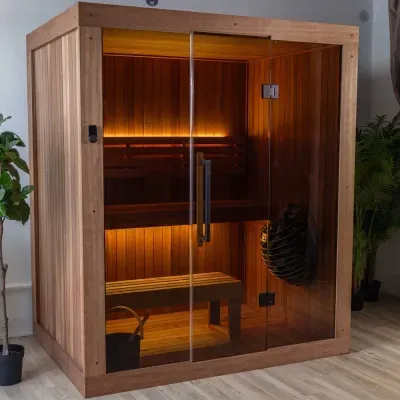
An infrared sauna heats you with emitters rather than heating the air, so the room runs cooler: 110–135°F, against 150–195°F in a traditional sauna, according to Cleveland Clinic. Melissa Young, MD, told Cleveland Clinic that infrared saunas "can definitely be much more comfortable for people while delivering the same sort of benefits." That's an expert's opinion; no trial in my sources compares the two head to head. How the heating works is on what an infrared sauna is.
Cooler air doesn't mean you don't heat up. In a small 2022 trial of 10 healthy women, 45 minutes in an infrared sauna raised ear temperature by about 1°C (1.9°F) over rest, more than moderate cycling did. It didn't reproduce exercise's effects on blood pressure, artery stiffness or heart rate variability. Across 16 pooled studies of both sauna types, heart rate rose about 18 beats a minute and systolic pressure fell about 5.5 mmHg right after a session.
Waon therapy: where most of the research comes from
The Waon routine is precise: 15 minutes at 140°F (60°C), then 30 minutes lying under a blanket, usually five times a week. A 2018 meta-analysis found that only infrared sauna studies met its criteria in heart failure, and that two to four weeks of Waon improved heart-function markers in the short term. Its authors rated the strength of evidence from "moderate to insufficient."
The largest trial, WAON-CHF, randomized 149 hospitalized patients across 19 Japanese centers. After 10 days, the Waon group walked farther in six minutes and had better symptom scores. Its main target, a blood marker of heart strain, didn't change significantly. No serious adverse events were reported in either group. A 2001 study of 25 men with risk factors found better blood-vessel function after two weeks of daily sessions, without a randomized control group.
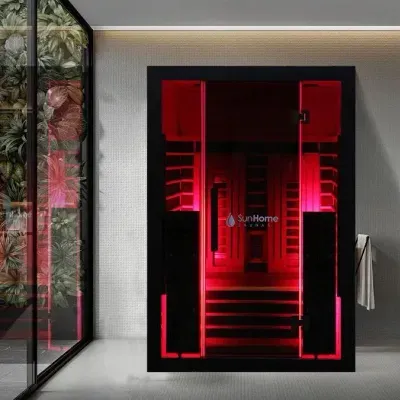
These were patients under medical supervision, on a fixed schedule. A home cabin can reach the same temperature; it doesn't come with the rest of the protocol. If you want one that does reach 140°F, these list it (29 of the infrared cabins in our database don't publish a maximum at all):
- Sun Home Solstice 3-Person: up to 140°F per the brand, $6,999
- JNH Lifestyles Joyous 1-Person: up to 140°F per the brand, $2,199
- JNH Lifestyles Joyous+ 2-Person: up to 170°F per the brand, $2,499
Pain, stiffness and workouts
The pain data is thin. In a 2009 pilot study of 17 people with rheumatoid arthritis and 17 with ankylosing spondylitis, pain and stiffness eased during sessions, and no flare-ups were reported. Over four weeks the improvement wasn't statistically significant, and there was no control group.
Several workout studies used infrared cabins. In a crossover trial of 16 basketball players, 20 minutes at about 109°F after strength training was followed by less soreness the next morning; another small study found no difference after strength training. The full picture is on sauna for muscle recovery.
Red light and full spectrum saunas: does the extra light change anything?
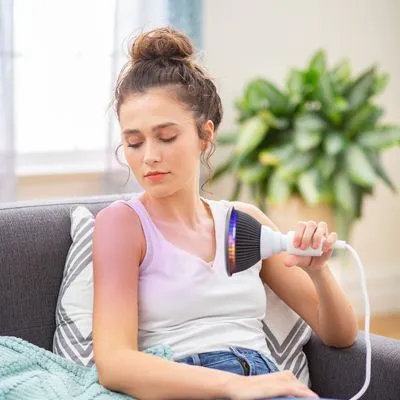
I found no study that compares full spectrum or red light cabins with plain far infrared ones. Full spectrum cabins add near and mid infrared emitters; red light cabins add LED panels. The research on red light comes from LED devices like masks and panels, used at set wavelengths and doses, and it's summarized on red light therapy benefits. Whether a cabin's LED panel delivers a similar dose isn't something brands publish. Colored "chromotherapy" lights are a different thing again, with no studies in my sources. Models with LED panels are on red light saunas.
Infrared sauna blankets
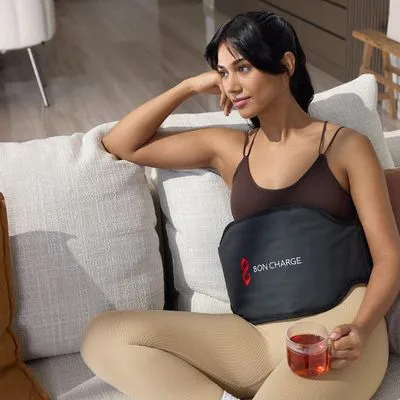
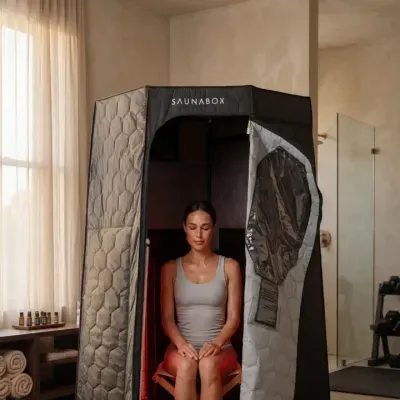
Every study above used a cabin. I found none on sauna blankets, so whatever a blanket does, the research here doesn't describe it. Blankets are a cheaper way to get heat at home, and they're compared on sauna blankets. One safety note: in October 2025 the CPSC announced a recall of LifePro BioRemedy blankets over burn injuries.
What infrared saunas aren't shown to do
Detox. "Infrared penetrates deeper and detoxifies better" appears on many brand pages. No comparative trial backs it. In a recall the FDA posted in 2015, the agency listed the reason for one Therasage home sauna as false and misleading labeling; the company had to discard materials with phrases including "naturally detoxify," toxin elimination and specific calorie counts (FDA recall record Z-1539-2015).
Burning calories. No study in my sources measured fat loss in an infrared sauna. What you lose is water (see sauna benefits).
Cholesterol. The 2009 review found "consistent fair evidence to refute" it.
Curing depression. A 2016 JAMA Psychiatry trial is often cited here, but it studied a single session of whole-body hyperthermia in 29 people, not a sauna. The sauna study in the table is 28 hospital patients.
Immunity. The FTC warned Enlighten Sauna and Celebration Saunas in 2020 over claims that infrared saunas prevent or treat COVID-19.
Downsides and who should skip it
Lower air temperature doesn't remove the usual sauna risks: dizziness on standing, especially on blood pressure medicines (2006 review), and dehydration. Cleveland Clinic says not to use an infrared sauna if you're pregnant or trying to conceive, and flags multiple sclerosis and acute illness. The full list is on infrared sauna safety. This page is a summary of research, not medical advice (medical disclaimer).
Questions people ask
Does an infrared sauna actually work?
It reliably heats you up and makes you sweat. For health, the best evidence is short-term heart-function improvements in hospital patients with heart failure on a fixed routine. For healthy people at home, the studies are too few and too small to say, and claims about detox, weight loss and cholesterol aren't supported.
How long until an infrared sauna shows benefits?
The Waon studies measured changes after two to four weeks of sessions five days a week, in patients. I found no study that measured how long it takes for healthy people.
What is the downside to an infrared sauna?
The same as other saunas: dizziness when you stand up, dehydration and overheating, plus less evidence than for traditional saunas. Some groups, including pregnant women, are advised to avoid it. See infrared sauna safety.
How long should I sit in an infrared sauna?
Cleveland Clinic suggests no more than 30 minutes, three or four times a week, at 110–135°F. The Waon studies used 15 minutes at 140°F. More on how long to stay in a sauna.
Which is better, red light therapy or an infrared sauna?
They do different things. An infrared sauna heats your body; red light therapy shines light of set wavelengths on the skin without much heat. They've been studied for different uses: see red light therapy benefits and the table above.
What is the healthiest type of sauna?
No trial compares them directly. Traditional Finnish saunas have the most research, mostly observational; infrared research is mostly in hospital patients. See infrared vs traditional sauna.