







Sauna for muscle recovery: what studies after workouts found

The research is small and mixed: every study had between 6 and 40 people. After strength training, one trial found less soreness the next morning with an infrared sauna, and another found no difference. In swimmers, a hot sauna after hard training was followed by slower times the next morning. Six weeks of post-workout sessions didn't change muscle growth. Regular sauna after running has been linked to better endurance, but that's heat adaptation, not recovery.
The evidence at a glance
Here's every workout study in my sources, including the one most gym and sauna-dealer pages leave out: the trial where performance got worse. Look at the second column before the last one. These are small groups, mostly young athletes.
| Study | Who and how many | Sauna routine | What was measured | Result |
|---|---|---|---|---|
| Ahokas 2023, crossover trial | 16 male basketball players | Infrared, 109°F (43°C), 20 min after strength training | Soreness and jump height next morning | Better less soreness, smaller drop in jump |
| Mero 2015 | 10 active men | Infrared, 95–122°F (35–50°C) | Recovery after strength and endurance sessions | Mixed none after strength; slightly higher jump 30 min after endurance |
| Skorski 2020, crossover trial | 20 swimmers and triathletes | Traditional, 176–185°F (80–85°C), 3 × 8 min after hard training | Swim times next morning | Worse 1.69 s slower over 4 × 50 m |
| Ahokas 2025 | 40 female athletes | Infrared, 122°F (50°C), 10 min, 3 times a week for 6 weeks | Muscle growth, jump power | No difference for muscle growth; one jump measure improved |
| Scoon 2007 | 6 male runners | Traditional, 194°F (89.9°C), about 31 min, about 13 times in 3 weeks | Run time to exhaustion | Better 32% longer |
| Kirby 2021 | 20 runners, not randomized | Traditional, 214–226°F (101–108°C), about 28 min, 3 times a week for 3 weeks | Fitness and heat tolerance | Better VO₂max up, lower heart rate in heat |
| Khamwong 2015, randomized | 28 young adults | Sauna before a wrist exercise | Strength and range of motion afterward | Better smaller losses |
| Laukkanen 2019 | 93 adults, average age 52, not athletes | Traditional, 163°F (73°C), 30 min | Heart rate and heart rate variability | Better shift toward "rest" mode; no control group |
Soreness and next-day performance
The most cited positive result is a 2023 crossover trial of 16 male basketball players. After a strength session, they either sat in an infrared cabin at about 109°F for 20 minutes or rested. With the sauna, they reported less muscle soreness and felt more recovered the next morning, and their jump height dropped less. Overnight heart rate variability didn't differ. Sixteen people, one session: it's a signal, not a rule.
A 2015 study of 10 active men found "no differences in any variables" between infrared sauna and no sauna after strength training. After an endurance session, jump height 30 minutes later was slightly better with the sauna: 0.34 m against 0.32 m.
Then there's the result that cuts the other way. In a 2020 randomized crossover trial, 20 swimmers and triathletes did a hard session and then either three 8-minute rounds in a traditional sauna at 176–185°F or a placebo. The next morning, their 4 × 50 m swim was 1.69 seconds slower after the sauna, against 0.66 seconds faster after placebo, and they reported more stress. The authors advise caution with a sauna when hard training or a race follows.
Put together: small studies, different saunas, different sports, and results in both directions. I can't honestly say a sauna speeds up recovery.
Does a sauna build muscle?
Not in the one trial that checked. In a 2025 study, 40 female athletes did the same strength program for six weeks; half added 10 minutes of infrared sauna at 122°F three times a week. Muscle growth didn't differ between the groups. One jump measure and peak power improved more with the sauna, and the authors' own wording is careful: it "might boost" some performance measures. No study in my sources ties sauna use to muscle gain through growth hormone or anything else.
Endurance and heat acclimation
The strongest workout numbers are about endurance, and they're best read as heat adaptation. In a 2007 study, six male distance runners added about 31 minutes of sauna at roughly 194°F after training, about 13 times over three weeks. Their time to exhaustion rose 32%, which the authors estimated as about a 1.9% gain in a race, and their plasma volume rose 7.1%. Six runners is a very small group.
A 2021 study of 20 runners, 12 with sauna and 8 without, used about 28 minutes at 214–226°F three times a week for three weeks. VO₂max rose by 0.27 liters a minute, and in a hot-room test the sauna group had lower heart rates and body temperatures. Only the hottest traditional saunas in our database list a top setting in that range: the highest is 230°F.
If you're training for a race in hot weather, this is the part of the research that applies. It isn't the same as feeling less sore.
Sauna before exercise
One randomized trial of 28 young adults put the sauna before the workout: a session before an eccentric wrist exercise was followed by smaller losses in grip strength, wrist strength and range of motion. It's one small study of one joint, so I wouldn't read it as advice for leg day.
Your heart rate after a sauna
In a 2019 study of 93 adults with heart disease risk factors (not athletes), heart rate at the end of the cool-down after a 30-minute session at 163°F was 68 beats a minute, against 77 before the sauna, and heart rate variability shifted toward the parasympathetic, or "rest," side. There was no control group, so this describes what happened, not what the sauna caused.
Protocols the studies used
No study set out to find the best time or temperature after a workout. These are just the routines they used, so you can see the range:
| Sauna | Heat | Time | How often | Study |
|---|---|---|---|---|
| Infrared | 109°F (43°C) | 20 min | Once, after strength training | Ahokas 2023 |
| Infrared | 122°F (50°C) | 10 min | 3 times a week, 6 weeks | Ahokas 2025 |
| Traditional | 176–185°F (80–85°C) | 3 × 8 min | Once, after hard training | Skorski 2020 |
| Traditional | 194°F (89.9°C) | About 31 min | About 13 times in 3 weeks | Scoon 2007 |
| Traditional | 214–226°F (101–108°C) | About 28 min | 3 times a week, 3 weeks | Kirby 2021 |
The infrared routines are mild: 109–122°F is within reach of most infrared cabins. These list at least 122°F (compare all on infrared saunas):
- Sun Home Solstice 3-Person: up to 140°F per the brand, $6,999
- JNH Lifestyles Joyous 1-Person: up to 140°F per the brand, $2,199
- JNH Lifestyles Joyous+ 2-Person: up to 170°F per the brand, $2,499
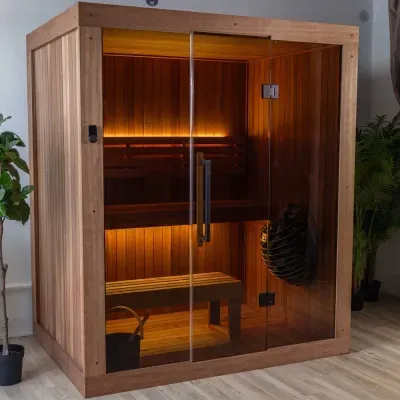
For the traditional routines you need 176°F or more. These list it (more on dry saunas and outdoor saunas):
- Redwood Outdoors Alcove Indoor Sauna - 2 Person: up to 194°F per the brand, $4,299
- Sun Home Nova 6-Person Indoor Traditional Sauna: up to 230°F per the brand, $15,799
- Finnmark Designs FD-5 Trinity XL Infrared & Steam Sauna Combo: up to 194°F per the brand, $8,995
General guidance on session length is on how long to stay in a sauna.
Infrared vs traditional in these studies
The infrared studies used mild heat, 109–122°F, and short sessions after strength work: one found less soreness, one found no difference, and the six-week study found no extra muscle growth. The traditional studies used much hotter rooms, 176–226°F, and longer sessions: the endurance results were positive, and the swim result was negative. Different sports, outcomes and heat levels, so the studies can't tell you which type is better for recovery. If you're choosing a sauna for other reasons, infrared vs traditional sauna compares them on wiring, price and heat.
For muscle and joint pain outside of training, the only infrared study in my sources is a pilot in 34 people with arthritis: pain eased during sessions, but the change over four weeks wasn't significant.
Fluids and weight after a workout sauna
A sauna after training adds to the water you've already sweated out. In a small 2003 study of 12 adults, three 20-minute sessions at 158°F took off 1.8% of body weight in men and 1.4% in women. After an hour of drinking, the weight hadn't come back, and the women jumped lower than before. That lost weight is water, so it doesn't count as weight loss, and it's a reason to drink more after a workout sauna, not less.
When to skip it
- Before a race or a hard day. The swimmers in the 2020 trial were slower the next morning.
- With alcohol. Half of sauna deaths in Finland involved alcohol (2008 study), and in Sweden almost everyone who died in a sauna was alone (2008 study). Post-game beers and a sauna don't mix.
- If you're dizzy. Blood pressure drops after a session, and blood pressure medicines add to it (2006 review). Stand up slowly.
- With a heart condition. A Brown University Health cardiologist advises people with heart disease to keep sessions under 20 minutes and skip the cold plunge afterward (Brown Health).
More on sauna safety; this page isn't medical advice (medical disclaimer).
Sauna blankets and steam rooms after the gym
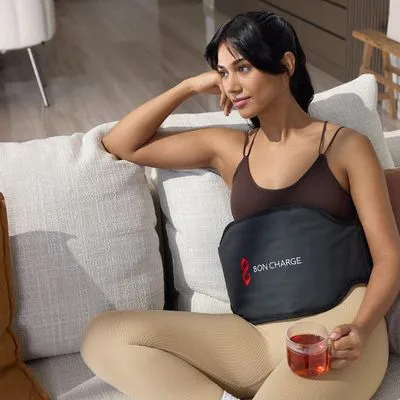
I found no study of sauna blankets or steam rooms after exercise. The results above come from infrared cabins and traditional saunas, and they shouldn't be assumed for either. If a blanket is what fits your space, they're compared on sauna blankets; what steam rooms have been studied for is on steam sauna benefits.
Questions people ask
How long should I sit in a sauna for muscle recovery?
There's no proven time. Studies after workouts used 10 to 20 minutes in infrared cabins at 109–122°F, and about 24 to 31 minutes in hotter traditional saunas. See the protocols table above.
Does a sauna speed up healing?
For muscle soreness, the results are mixed: one small trial found less soreness, another found no difference. I found no study on sauna and healing of injuries or wounds.
What is 20 minutes in the sauna equivalent to?
It isn't equivalent to exercise. Heart rate rises, by about 18 beats a minute across pooled studies (Li 2020), but in a small trial a 45-minute infrared session didn't reproduce the effects of cycling on blood pressure or arteries (Hussain 2022).
What does 30 minutes in a sauna do to your body?
Body temperature and heart rate go up, and blood pressure drops for a while afterward: from 137 to 130 mmHg systolic in 102 adults after 30 minutes at 163°F (Laukkanen 2018). You also lose water.
What should you not do after a sauna?
Don't drink alcohol, don't jump up if you feel light-headed, and don't skip the water. If you have heart disease, skip the ice-cold plunge.