


Red light therapy benefits: what it can and can't do, by the evidence

The strongest home-use evidence is for hereditary hair thinning: several meta-analyses agree, though most trials used laser combs and helmets. In hospitals, international cancer-care guidelines recommend specific laser protocols to help prevent mouth sores during cancer treatment. For wrinkles, acne and pain the evidence is limited or mixed, and for "detox" I found no controlled trials at all.
One catch runs through all of it: trials used set wavelengths, power and times. Ten minutes under a home device isn't automatically the dose a study used.
The evidence at a glance
I rated each use on one rule. Strong: several good randomized trials or a meta-analysis that agree. Moderate: trials and meta-analyses point the same way, with real limits. Limited: few, small, unblinded or conflicting studies. None: no trials found, or trials found no benefit. Every row links to the study it rests on.
| Use | Evidence | Best evidence | Light used in studies | Home devices? |
|---|---|---|---|---|
| Hair thinning (androgenetic alopecia) | Moderate | Meta-analysis, 2017; 4 sham-controlled trials, 269 people | 655 nm lasers, often plus LEDs; 3 times a week, 16–26 weeks | Yes: FDA-cleared caps, helmets, combs |
| Wrinkles and skin texture | Limited | Review of LED trials, 2018 (grade C) | 633–660 nm red, 830 nm near-infrared; 2 times a week or daily | Yes: FDA-cleared masks |
| Acne | Limited | Cochrane review, 71 trials; meta-analysis of home LEDs, 216 people | Blue 414–445 nm plus red 630–670 nm | Yes: masks with blue light |
| Neck pain | Moderate | Meta-analysis, 16 trials, 820 people | Clinic lasers applied to points | No direct evidence |
| Knee osteoarthritis pain | Limited | 2019 and 2024 meta-analyses disagree with 2015 | Lasers, 4–8 J per point | No direct evidence |
| Muscle endurance | Moderate | Meta-analysis, 37 studies (small effect) | Light on the muscle before exercise | Panels untested for this |
| Recovery with whole-body beds | None shown | Review of 5 studies, 105 people | Whole-body beds | Studied; no benefit found |
| Weight loss and inch loss | Limited | Meta-analysis, 11 trials, 569 people: waist down, fat mass not | Mostly low-level lasers, often with diet or exercise | No LED evidence |
| Cellulite | None shown | Split-thigh trial, 8 women | LED bed, 20 minutes twice a week | Bed alone: no change |
| Mouth sores during cancer treatment | Strong, clinic only | MASCC/ISOO guideline, 2019 | Intraoral lasers on fixed protocols | No |
Skin: wrinkles and texture
The trials that look best on paper compare skin with itself before treatment. In a 2007 split-face trial (76 people analyzed), 633 nm, 830 nm or both, twice a week for four weeks, cut measured wrinkles by up to 36% and raised elasticity by up to 19% compared with baseline. Against the sham group, the wrinkle difference didn't hold up, according to a 2018 review of LED trials that rated skin rejuvenation evidence grade C overall.
The best recent mask trial is sobering. In a 2025 double-blind study of 95 women using a 660 nm mask for 21 minutes, specialists' wrinkle scores didn't differ from sham; software-measured wrinkle length and satisfaction did improve. Three sessions a week did no better than two. A 2022 review of home devices recommended home LEDs for acne, not for wrinkles.
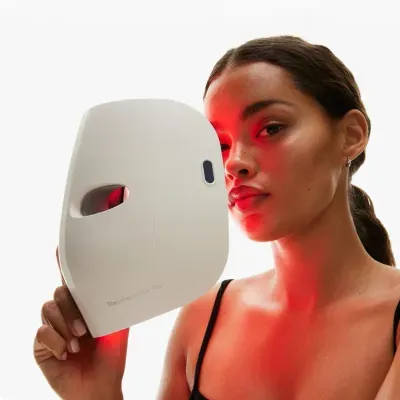
So: some measurable change, small, and mostly in trials funded by device makers. If you still want to try it, these cleared masks use the red-plus-near-infrared pair from the trials. They're ranked with the rest on the best red light masks:
- Shark CryoGlow LED Face Mask (FW312): 415, 630 and 830 nm, 510(k) K242796, $299.99
- Solawave Radiant Renewal Eye Recovery Pro (PH-e03): 605, 630, 660 and 830 nm, 510(k) K261602, $249
- HigherDOSE Red Light Face Mask: 630 and 830 nm, 510(k) K241933, $349
What a realistic result looks like, week by week: red light mask before and after.
Hair: androgenetic alopecia
This is where the research is most consistent. At least six meta-analyses point the same way; a 2017 meta-analysis found laser light, like minoxidil and finasteride, superior to placebo for hair growth in men. The largest trials, four sham-controlled studies with 269 men and women, used a laser comb three times a week for 26 weeks and added about 18 to 26 hairs per cm², against about 2 to 9 with the sham comb. HairMax, the comb's maker, partly funded them.
Two limits matter. Results were measured over 16 to 26 weeks, with no long-term data. And it's energy per session that tracked with results in a 2020 regression of trials, not the number of diodes. A cap with more LEDs isn't automatically better.
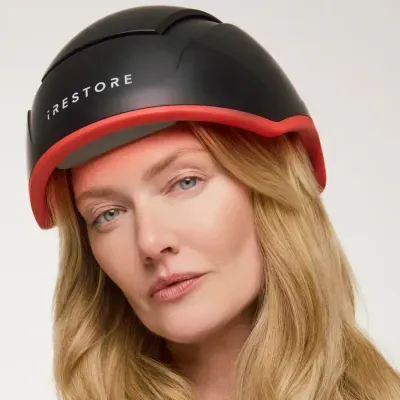
Devices cleared by the FDA for hair growth that we link to a store. HairMax, the brand from those trials, has its own clearance too (K110233) but no store link here; all are compared on the hair growth page:
- CurrentBody LED Hair Growth Helmet (CurrentBody Skin LED Hair Regrowth, MZ-07): 510(k) K230336, $859.99
- HigherDOSE Red Light Hat (HG-120K): 510(k) K242363, $449
- Bon Charge Red Light Cap: 510(k) K253349, $449
Pain and muscle recovery
Most pain evidence comes from lasers aimed at specific points in a clinic, not from panels at home. A 2009 Lancet meta-analysis of 16 trials found clinic lasers reduced neck pain more than placebo, with side effects no different from placebo. For knee osteoarthritis the meta-analyses disagree: one in 2015 found no effect, one in 2019 found less pain at specific doses, and one in 2024 called the evidence "very low certainty."
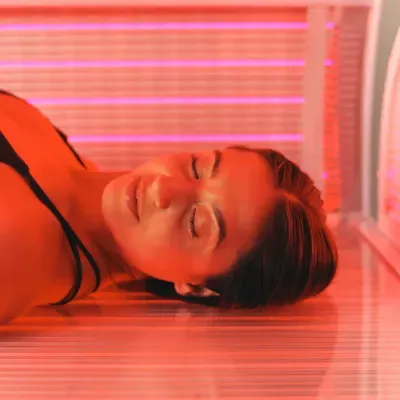
For muscles, light shone on the muscle before exercise gave a small boost to endurance in a 2022 meta-analysis, but nothing for strength, running or swimming. Whole-body light beds did worse: a 2025 review found "no evidence of benefits for exercise recovery or performance."
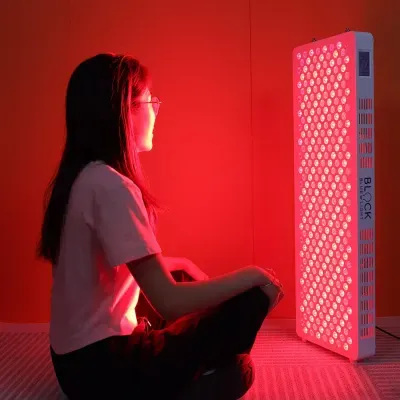
No trial tested a consumer panel for pain. If you want one anyway, start with panels whose output someone outside the brand has measured; the panel comparison has the numbers:
- Hooga HG300: 55 mW/cm² average measured by Alex Fergus, $199
- Mito Red Light MitoPRO 1500+: 76.5 mW/cm² average measured by Alex Fergus, $1,169
- Hooga ULTRA1500: 81.7 mW/cm² average measured by Alex Fergus, $1,399
PEMF mats are sold for the same aches; how their evidence compares with red light's is on PEMF vs red light therapy.
Acne: blue plus red
The 2016 Cochrane review of 71 trials put it plainly: "High-quality evidence on the use of light therapies for people with acne is lacking," and two-thirds of the trials were industry-sponsored. Newer data on home devices is more positive. A 2025 meta-analysis of six small trials (216 people) found inflammatory lesions fell about 45% more than in control groups, with no severe side effects.
The best signal is for blue and red together; in a 2000 trial, daily 15-minute blue-red sessions beat blue light alone at weeks 4 and 8. Red alone did no better than standard acne treatments in a 2021 meta-analysis. The American Academy of Dermatology's 2024 acne guideline doesn't list light therapy among its recommendations. Masks with blue light are on the masks page; blue light also carries the clearest eye warning (see safety below).
Clinical uses you can't replicate at home
The strongest recommendation in this whole field isn't for a home device. International cancer supportive-care guidelines (MASCC/ISOO, 2019) recommend photobiomodulation to help prevent oral mucositis, the painful mouth sores of some cancer treatments, using one of a few exact protocols. The 2020 summary lists them: intraoral lasers at 632.8 to 660 nm, set doses per point, delivered by clinicians during treatment. For LED devices the same use got only grade D in the 2018 LED review, which gave grade B to acute wounds and cold sores.
A clinic laser delivers a known dose to a known spot. A home panel or mask doesn't, which is why these results don't carry over.
What it doesn't do (or isn't shown to)
Weight loss. The "inch loss" research is on low-level lasers, not panels or masks, and it measures the tape, not the scale. In a 2009 sham-controlled trial of 67 people, a 635 nm laser device three times a week for two weeks took 3.51 inches off combined waist, hip and thigh measurements, against 0.68 with sham; two weeks after stopping, the treated group had regained 0.31 inches. A 2025 meta-analysis of 11 trials found smaller waistlines and some weight change, but no significant change in fat mass percentage, and many trials paired the light with diet or exercise.
Cellulite. In a small 2023 split-thigh trial, an LED bed twice a week for three months didn't change cellulite grade on its own; the thigh that also got an anti-cellulite gel did improve. A 2024 trial of 25 women measured pain sensitivity and skin temperature, not how the skin looked.
"Detox." I searched the medical literature for red light and detoxification and found no controlled trial, only one case report. Whole-body beds also didn't help exercise recovery in the review above.
Safety and who should skip it
Dermatologists describe the therapy as generally well tolerated, with temporary redness the most common skin effect (JAAD review, 2024). The eyes are the real concern. A 2020 case report described retinal damage in a woman who used a mask with blue light and open eye areas; a 2026 case report described angle-closure in both eyes in a woman two weeks into using a red light mask (she recovered after stopping, and a link wasn't proven). Neutrogena recalled its blue-and-red acne mask in 2019, citing "a theoretical risk of eye injury" for people with certain eye conditions or light-sensitizing medicines (AOP).
The makers' own instructions list who should check with a doctor first. Omnilux names pregnancy and breastfeeding, light-sensitizing medicines, lupus, light-triggered headaches and genetic eye disease (Omnilux contraindications); Mito adds recent burns and fever (MitoPRO manual); CurrentBody adds suspicious or cancerous skin lesions (CurrentBody mask guide). On cancer: a 2023 systematic review found no clinical trial data linking cosmetic photobiomodulation to new or recurring cancer, though its own evidence rating was low (level 4). If you've had skin cancer, ask your dermatologist. Read our medical disclaimer too: this page is a summary of studies, not advice for your case.
Cancer, eyes, pregnancy and the 2019 Neutrogena recall are covered in detail in is red light therapy safe?. How long and how often, device by device, is in how to use red light therapy.
How to use red light on your face
Follow your device's label: the time on it matches that device's output. As examples, Omnilux says 10 minutes, three to five times a week for four to six weeks, then less often. CurrentBody says 10 minutes too, but its pages disagree on frequency ("use daily" in one place, four times a week in another). CurrentBody also says its mask "can safely be used without goggles"; keep your eyes closed either way, and don't use a mask with blue light over open eyes.
More isn't better. Researchers describe a "biphasic dose response": past a point, extra light can blunt the effect (Chung, 2012). In the 2025 mask trial, three sessions a week did no better than two. Masks that publish their wavelengths, like the Omnilux Contour Face (633 and 830 nm) and the CurrentBody LED Red Light Therapy Face Mask: Series 2 (633, 830 and 1072 nm), let you compare them with the trials above; for the whole picture start at red light therapy.
Questions people ask
How do you use red light therapy on your face?
Clean skin, eyes closed, and the time on your device's label, usually around 10 minutes. Trials of masks used two or three sessions a week; three did no better than two in a 2025 trial.
Where should you not use red light therapy?
Not over open eyes, especially with blue light, and not over suspicious moles or lesions without a doctor's check. Makers also warn against use in pregnancy and with light-sensitizing medicines; the full list is in your device's manual.
Is red light therapy good for you?
It depends on what for. The evidence is moderate for hereditary hair thinning, limited for wrinkles and acne, weak for weight loss, and missing for "detox." It's generally well tolerated, with eye exposure the main risk.