



How to use red light therapy at home: distance, time and how often, device by device

The right routine depends on the device, because the dose your skin gets is light power multiplied by time. The FDA-cleared masks below are set for 10 minutes, 3 to 5 times a week. Panels run 10 to 20 minutes at the distance their maker names, and that distance differs from brand to brand. Longer isn't better: lab and animal studies show a two-phase response where too much light works worse than a moderate amount.
Why more isn't better
Light therapy has a "biphasic" dose response. A 2009 review by Michael Hamblin's group put it plainly: "low levels of light have a much better effect on stimulating and repairing tissues than higher levels of light." A follow-up review in 2011 saw the same curve in mice for both the dose per session and the number of sessions.
Dose is measured in joules per square centimeter (J/cm²): power in mW/cm² times seconds, divided by 1,000. Both cleared masks in the table are rated at 30 mW/cm², so a 10-minute session gives about 18 J/cm². The CurrentBody Series 2 510(k) summary lists that same 18 J/cm².
Skin trials worked at that level or lower. A 2014 controlled trial of 136 people normalized red light to about 9 J/cm², twice a week for 30 sessions, and found smoother skin and denser collagen than in controls. The 2007 split-face trial of 76 people ran twice a week for four weeks. Neither used daily sessions.
No one has settled the best dose. Harvard Health says "Scientists haven't yet pinned down how long each treatment session should last—its optimal 'dose.'" That's why the device's own label is the safest number to follow. Before you start, read the medical disclaimer. To turn a brand's mW/cm² figure into minutes per session at your distance, use the dosage calculator.
Device by device: what the manual says
I collected the routine from each maker's manual or FDA 510(k) summary for the devices in our database.
| Device | Distance | Session | How often, how long | Source |
|---|---|---|---|---|
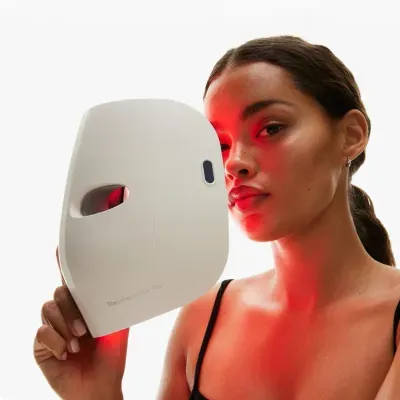
| Omnilux Contour Face | Worn on the face | 10 min | 3 to 5 times a week for 4 to 6 weeks, then "maintenance as desired." The 510(k) table says 5 times a week for 6 weeks | Quick Start, brand FAQ, 510(k) K191629 |
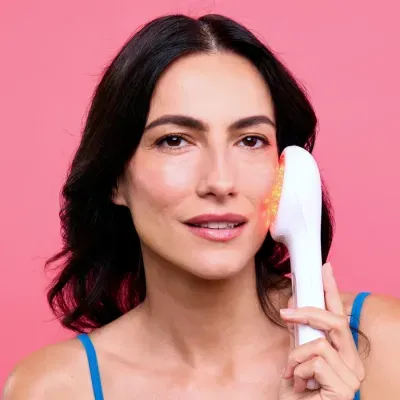
| CurrentBody LED Red Light Therapy Face Mask: Series 2 | Worn on the face | 10 min | 5 times a week for 6 weeks | 510(k) K250966 |
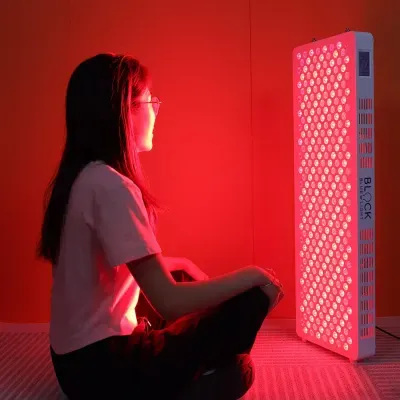
| Joovv Solo 3.0 | 16–24 in standard; 12–14 in Recovery+ mode; 4–6 in for topical heating | 10 min (15–20 min for problem areas), 16–24 in | Once a day, at least 6 hours apart on the same area | Joovv support, Gen 3.0 guidelines |
| Mito Red Light MitoPRO 1500+ | 12–18 in | 10 min per area | 4 to 6 times a week, at least one day off; no more than 15 minutes a session | MitoPRO+ manual, Jan 2025 |
| Hooga HG300 | 18 in for skin (about 5 min); 6–12 in for deeper tissue (about 10–15 min) | 5–15 min per area | 3 to 5 times a week; daily is allowed, no more than twice a day | HG Series manual |
| PlatinumLED BIOMAX 900 | 8–14 in; 18–24 in for skin | 10–20 min per area | No weekly number; no more than 2 or 3 body areas a day | BIO & BIOMAX manual v22 (2021; the current product page didn't load) |
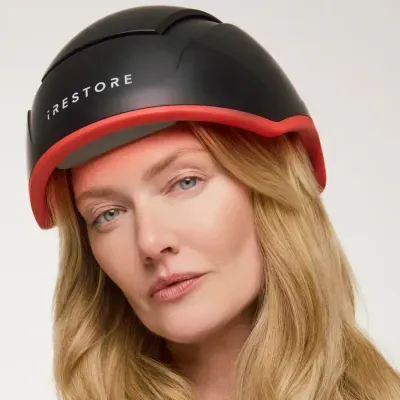
| iRestore Elite (ID-510) | Worn on the head | 12 min, daily | Every day | 510(k) K222081 |
| iRestore Professional (282) | Worn on the head | 25 min, every other day (3 times a week) | Every other day for 16 weeks, then as needed, never more often | manual, 510(k) K183417 |
| CurrentBody LED Hair Growth Helmet (CurrentBody Skin LED Hair Regrowth, MZ-07) | Worn on the head | 10 min, daily | Every day | 510(k) K230336 |
| HairMax LaserBand 82 ComfortFlex | Worn on the head | 1.5 min (90 seconds), 3 times a week | As on the brand page | HairMax product page |
Distance and time don't carry over from one device to another. Hooga shows this inside one brand. The HG300 manual says about 5 minutes at 18 inches. The Hooga PRO750 product page says 2–3 min (skin, at 18 in) / 5–10 min (deep tissue, at 6–12 in) per area. Hooga rates the PRO750 at 183 mW/cm² at 6 in (205 mW/cm² at 3 in), against 73 mW/cm² at 6 in for the HG300, so it reaches the same dose sooner.
Two brands contradict themselves. Omnilux's own page says 3 to 5 sessions a week, while the 510(k) its listing points to (K191629, filed as the faceLITE mask) lists 5 a week for 6 weeks. The manual for CurrentBody's first-generation mask says "Use daily." in the text and "10 minutes, 4 times per week" in its spec table.
PlatinumLED's site returned errors on Oct 7, 2026, so its numbers come from the 2021 manual. Hooga's PRO series manual wasn't available; the PRO750 figures are from its product page.
Can you use red light therapy every day?
Some manuals say yes, some say no, and the difference tracks the device. Joovv's guidelines call for "once daily use" with at least six hours between sessions on the same area. Hooga's HG manual says "3-5 treatments per week is great. You can treat daily, but no more than 2x/day."
Mito wants a rest day: 4 to 6 sessions a week, "at least one day off per week," and no more than 15 minutes in one session. Its manual also says, in capitals, "DO NOT exceed 20 minutes of use in one therapy session."
Omnilux is the clearest no. Its FAQ says: "We recommend only using the devices 3-5x a week, as we have not studied the effect of using the device every day."
Some hair helmets are labeled for every day, and their power is tiny. CurrentBody's helmet runs at 1.67 mW/cm² per its 510(k), a small fraction of what the masks put out, with a daily label. So "is 20 minutes too much?" has no single answer. For a Mito panel, yes; for a 20-minute hair helmet, that's the label.
Your first two to three weeks
Joovv and Mito both tell new users to start short. Joovv suggests "1-2 minute treatments per area" and building "up to a 10-minute session over the course of 2-3 weeks." Mito says 2 to 3 minutes per area, working up to 10 over the same 2 to 3 weeks. PlatinumLED's manual says to "begin your therapy slowly using less time and more distance," and to cut time or step back "if any type of discomfort or excessive sensitivity is felt."
The manual for CurrentBody's first mask has the most specific skin test: run a full 10-minute session on your arm first. "If the area has turned red and lasts for more than 2 hours, your skin has a sensitivity to light," and the brand offers a refund within 14 days. HairMax's LaserBand 41 manual has a shorter version for people on light-sensitizing medicines: two minutes with your forearm near the lasers.
With retinol, after microneedling, Botox or surgery
I searched for controlled trials of an ordinary LED mask or panel used right after microneedling, alongside retinol, or after Botox, and found none.
Microneedling. The studies that pair microneedling with red light are photodynamic therapy: a light-sensitizing drug (ALA) goes on the skin, then 630 to 635 nm light activates it, as in this 2010 study of 21 people. That's a prescription procedure, not a home mask session.
After a laser. In a 2009 split-face trial of 20 people, yellow 590 nm LED right after a fractional laser cut redness at 24 hours; by 96 hours there was no difference. In a 2006 study of 10 patients after eyelid surgery and skin resurfacing, 633 nm light sped healing on the treated side.
Botox and fillers. No studies. Mito's manual says users with "facial fillers and/ or Botox injections should consult their dermatologist prior to use," and Joovv says the same. Joovv also says "post-surgery users should consult a physician prior to use" (Joovv support).
Retinol. CurrentBody's contraindications page lists retinol, tretinoin, adapalene and isotretinoin among light-sensitizing products and says it doesn't recommend "LED with prescribed skincare without consent from your practitioner." The FDA's adverse-event database has one 2023 report, not verified, of "rash, burn and blisters" from a mask used after tretinoin.
Ask the person who did your procedure when you can restart.
Morning or night?
For skin, there's no data either way. The one timing experiment people cite is a 2021 study where 3 minutes of 670 nm light shone into the eyes in the morning improved color contrast vision for about a week in 20 people; the same light around midday did nothing in 6. That was light aimed at the eye for vision, and it doesn't carry over to a face mask.
Joovv's own guidance is "Any Time of Day." Pick the slot you'll keep, and if your panel and your sunscreen share a morning, use the light on bare skin first: CurrentBody's manual says SPF creams "could block light penetration."
For hair: daily or every other day
Hair devices have the widest spread of schedules, and each is set in the device's own 510(k). The table shows 12 minutes daily for the iRestore Elite (ID-510) and 25 minutes every other day for the iRestore Professional (282). The CurrentBody Dual Light helmet is cleared for 20 minutes every day, and HairMax's laser caps for "30 minutes, every other day, on non-consecutive days, for the initial treatment regime of 16 weeks" (K180885).
The trials behind them mostly used every other day. A 655 nm helmet, 25 minutes every other day for 16 weeks, gave men 39% more hair growth than a sham device (Lanzafame 2013, 44 people), and the same schedule beat a sham in women (Lanzafame 2014, 47 people). A HairMax laser comb used 3 times a week for 26 weeks beat a sham comb on hair density (Jimenez 2014, 269 people). A 2017 systematic review of 11 studies found more hair density in 9 of them.
The iRestore Professional manual is blunt about stopping: "Discontinuing the use of the iRestore may result in the progression of hair loss." Plan on 16 weeks before judging, and on keeping it up after. Models and prices are on red light therapy for hair growth.
Eyes and skin checks
The American Academy of Dermatology says to "wear eye protection if the directions tell you to" and "don't substitute sunglasses for protective goggles" (AAD). Brands disagree on whether you need them. Mito says eye protection "should be worn when looking directly towards the light, particularly when NIR is active." PlatinumLED includes goggles "for your comfort." Hooga's HG manual says eye protection is "not required." CurrentBody's first-generation manual says its mask "can safely be used without goggles." Follow your own device's manual.
For skin, the same CurrentBody manual says not to use the mask "if your skin is red or swollen from a previous treatment." Omnilux, CurrentBody and Hooga all flag light-sensitizing medicines: Omnilux says not to use its mask while taking them, the other two say to ask your doctor first. Who should skip red light entirely, and where not to aim it, is on is red light therapy safe.
Pick a device that fits the routine you'll keep
Match the device to the schedule you'll keep for six weeks or more.
- Ten minutes, a few times a week, face only. A worn mask needs no distance and switches itself off. Omnilux Contour Face: 10 min, $395, FDA-cleared (K191629). More options on the best red light therapy masks.
- Body areas, 10 to 20 minutes, standing in front of a panel. Mito Red Light MitoPRO 1500+: 10 min per area, $1,169; Mito gives the clearest weekly limits of the panels here. No panel in the table has a 510(k); compare them on red light therapy panels.
- Daily, hands-free, scalp. CurrentBody LED Hair Growth Helmet (CurrentBody Skin LED Hair Regrowth, MZ-07): 10 min, daily, $859.99, FDA-cleared (K230336).
For what the studies show each device type can and can't do, see red light therapy benefits. All device types side by side are on the best red light therapy devices.
Questions people ask
Is 20 minutes of red light therapy too much?
It depends on the device. Mito's manual caps a session at 15 minutes and Omnilux's mask stops at 10, while Joovv allows 15 to 20 for "symptomatic areas" and CurrentBody's Dual Light helmet is cleared for 20 minutes a day.
Is 10 minutes of red light therapy enough?
For a cleared mask rated at 30 mW/cm², 10 minutes is the whole session: about 18 J/cm², the dose listed in CurrentBody's 510(k). For panels, 10 minutes is the standard time at Joovv and Mito's distances. Some panels need less: Hooga's PRO750 page says 2 to 3 minutes for skin.
Can you overdo LED red light therapy?
Yes, in the sense that more light stops helping. Reviews of lab and animal work describe a two-phase response where high doses work worse than moderate ones. Manuals set limits for that reason: Mito says "More is not always better," and Hooga allows no more than two sessions a day.
Is it safe to do red light after microneedling?
There's no controlled trial of a home LED device right after microneedling. The studies pairing the two used a prescription light-sensitizing drug. Ask the person who did your treatment when to restart.
Where should you not put red light therapy?
Mito's manual has the longest list: no use on open, fresh wounds or recent burns, and warnings for the abdomen in pregnancy, the neck and upper chest with an overactive thyroid, and the eyes. The full list is on is red light therapy safe.