









How much electricity does a sauna use? Cost per session, month and state

A sauna uses its rated power for as long as the heater is on. A 1,720 W infrared cabin like the Clearlight Premier IS-2 Far Infrared uses at most 1.72 kWh an hour, about $0.31 at the US average home rate of 18.31¢ (EIA, July 2026). A 6 kW traditional sauna uses up to 6 kWh an hour, about $1.10. Warm-up time counts too, and rates run from 12.72¢ in Louisiana to 48¢ in Hawaii.
What a sauna draws
Brands publish wattage for 71 of the saunas we track. By type:
- Sauna blankets: 420 W to 1,260 W
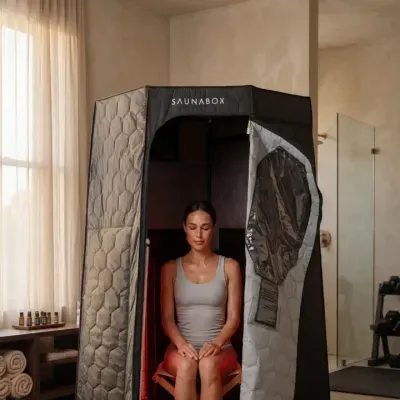
- Portable infrared tents: 1,000 W to 1,600 W; steam tents: 800 W to 1,600 W
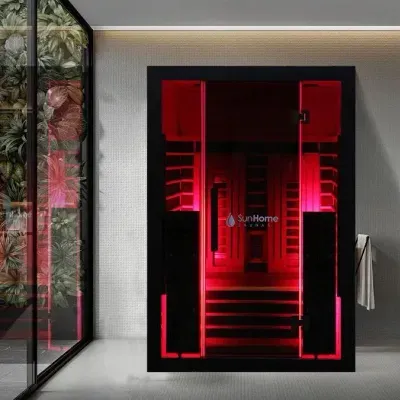
- Indoor infrared cabins: 1,350 W to 3,860 W
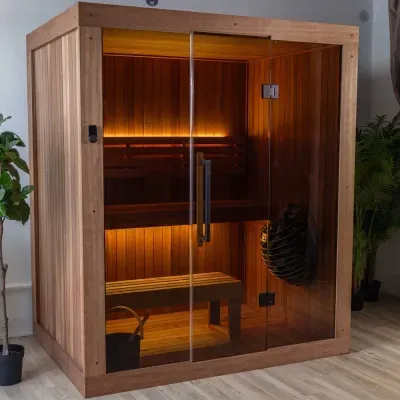
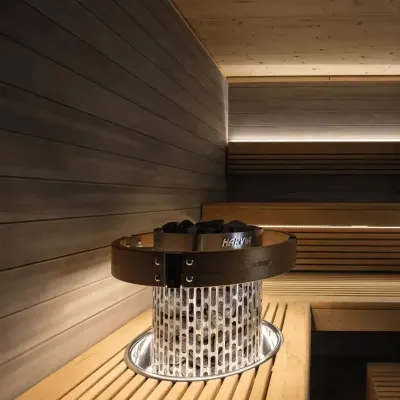
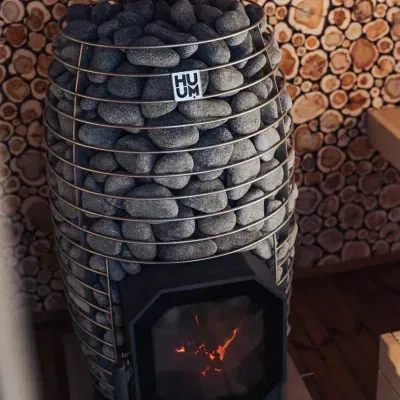
- Traditional saunas with an electric heater: 3,500 W to 8,000 W
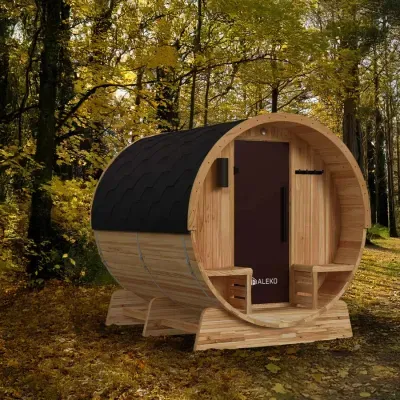
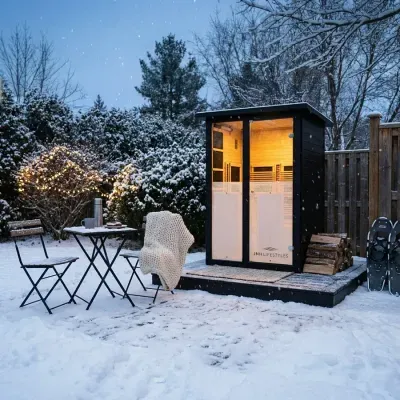
- Outdoor saunas: 2,320 W to 10,500 W
That's the most each one can pull. Electric sauna heaters and infrared panels switch off and on to hold the temperature you set, so a session usually uses less than the rated power times the minutes. How much less depends on insulation, the room around it and the setting, and no brand we checked publishes a number. The calculator therefore gives an upper bound.
What the sauna itself costs to buy is on how much a home sauna costs. For a traditional sauna, heater size follows room size; the heater size calculator shows which heaters fit your room, and a smaller room needs fewer kilowatts.
Warm-up is part of the bill
Few brands publish how long their saunas take to heat: 7 models in our list do. Almost Heaven gives 60 minutes for its traditional saunas, such as the Almost Heaven Madison 2-3 Person Indoor Sauna with a 6 kW heater. At the rated power, an hour of warm-up and a 20-minute session add up to 8.0 kWh, about $1.46 at the US average rate. For infrared cabins, brands rarely give a warm-up time; enter your own.
If you're still choosing, infrared vs traditional compares the two kinds, and plug-in saunas lists cabins that run on a household outlet.
Your state's rate
The calculator uses the average price of electricity to homes in each state from the US Energy Information Administration, Electric Power Monthly Table 5.6.A, for July 2026 (EIA). EIA marks these as preliminary. The US average was 18.31¢ per kWh; the cheapest state was Louisiana at 12.72¢ and the priciest Hawaii at 48¢. The same session costs 3.8 times as much in Hawaii as in Louisiana. Your own bill may show a different rate once delivery charges, tiers or time-of-use pricing are added; if you know it, the state average is only a starting point.
Hot tubs
A hot tub costs more to run than a sauna, because it keeps a few hundred gallons warm all day. California sets the limit: a standard spa may use no more than 3.75 × V2/3 + 40 watts in standby, where V is the fill volume in gallons, tested under ANSI/APSP/ICC-14 (20 CCR 1605.3). Spas sold in California must meet it, and the Energy Commission's label rules turn standby watts into kilowatt-hours a year by multiplying by 8,760 hours (CEC rulemaking); Hot Spring, for one, certifies its spas to the CEC standard.
The federal Department of Energy estimated 1,699 kWh a year for an average spa in standby, and an estimate from the spa industry and California utilities came to 1,567 kWh a year per household (87 FR 54123). That's about 130 to 140 kWh a month, before anyone uses the jets.
Climate matters most. Hot Spring published lab figures for a mid-size spa used six times a week, from 100 kWh a month in Miami's weather to 253 kWh in Calgary's (Hot Spring). Its dollar figures use rates of 8 to 10 cents, well under what those states charge now:
| Climate | kWh a month | Hot Spring's rate and cost | EIA rate, July 2026 | Cost at EIA rate |
|---|---|---|---|---|
| Miami, FL | 100 | $0.10: $10 | 15.03¢ | $15 |
| Las Vegas, NV | 122 | $0.08: $9.76 | 12.77¢ | $16 |
| Tulsa, OK | 166 | $0.08: $13 | 14.35¢ | $24 |
| Seattle, WA | 188 | $0.08: $15 | 14.71¢ | $28 |
| Chicago, IL | 210 | $0.10: $21 | 19.22¢ | $40 |
Heaters themselves are big: the Hot Spring Limelight Flair has a 4,000 W, 230 V heater (spec sheet), and in a Cal Poly study of 27 spas cited by the California Energy Commission, heater demand ranged from 706 to 4,331 W, with heaters running 113 minutes a day on average (CEC staff report). Plug-in 120-volt spas exist; Bullfrog's need a dedicated 15 A circuit (Bullfrog manual).
Cold plunges
A chiller is a refrigeration unit, and its running cost depends on how many hours the compressor runs, which brands don't publish. What they do publish is the power:
- Renu Therapy's Cold Stoic 2.0: "350-500 Watts @ 3-5 Amps" while the chiller is running, on a standard 120 V outlet (Renu).
- Penguin Chillers, sold for many DIY tubs: 450 W for the 1/2 HP model and 830 W for the 1 HP (Penguin).
- Ice Barrel's chiller: about 115 V, a 15 A fuse rating and "True 1/2 HP", with no wattage given (Ice Barrel).
- Plunge's All-In: its product page says a 0.75 HP chiller on a 15 A, 120 V circuit (product page), while its comparison page says 1 HP and 20 A (tech specs). Ask Plunge which applies before you plan the circuit.
At $0.08 an hour for a 450 W chiller at the US average rate, the answer swings from a few dollars a month to about $60 if it never switched off. The calculator starts at that 24-hour ceiling; lower the hours to your own estimate.
Questions people ask
Does a sauna use a lot of electricity?
While it heats, yes: 1,350 W to 3,860 W for an infrared cabin and 3.5 to 9 kW for a traditional one. Used a few times a week, the monthly total is modest; the calculator above does the math for your state.
How much does a sauna add to your electric bill?
At the US average rate of 18.31¢, a 1,720 W cabin used 40 minutes, three times a week, adds at most about $2.73 a month. A 6 kW traditional sauna with an hour of warm-up costs more per session: up to $1.46.
How much electricity does a hot tub use?
About 130 to 140 kWh a month on federal and industry estimates, and 100 to 253 kWh in Hot Spring's tests depending on climate.
Is an infrared sauna cheaper to run than a traditional one?
Per hour, usually: infrared cabins in our data draw 1,350 W to 3,860 W against 3.5 to 9 kW for traditional heaters, and traditional saunas need a longer warm-up.