


LumeBox review: what's measured, what's claimed and what the fine print says
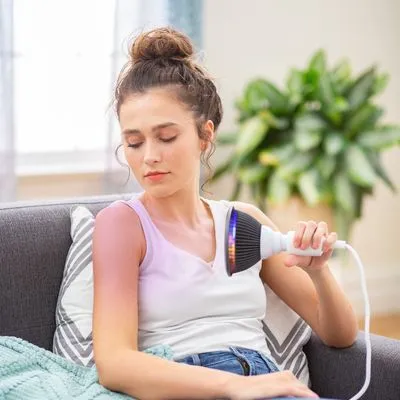
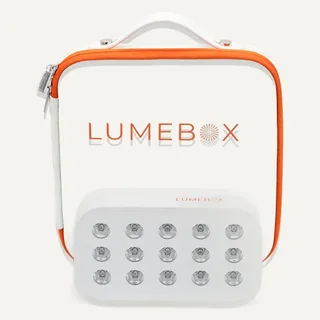
One panel, $629. The LumeBox 2.0 is a cordless handheld that shines red (660 nm) and near-infrared (850 nm) light from the same LEDs. Its output figures come from two labs LumeBox doesn't name, and nobody independent has measured it. The FDA has it listed as a Class II device with no 510(k), returns carry a 15% restocking fee, and LumeBox says not to use it while pregnant or breastfeeding.
 By Kirill Gissa · Published · Prices and FDA checked Oct 7, 2026
LumeBox 2.0 at a glance
Output: "claimed" is LumeBox's figure.
Verdict
It scores 9.25 of 10 under our method, losing points on the FDA record, warranty and returns, and owner reviews.
you want a battery-powered red and near-infrared light to hold against a knee, a jaw or a lower back, you're buying from LumeBox directly, and you're sure enough to keep it.
you want an FDA-cleared handheld (the Solawave 2-in-1 Skincare Mini (61043) is cleared for face and body and costs $119), an output figure someone outside the company has checked, or a return that doesn't cost you about $94. Skip it too if you're pregnant or nursing; that's LumeBox's rule, not mine.
Alternatives: handhelds and mini panels
The LumeBox costs more than any device on our wands list, so at this price you're shopping among small panels too.
| LumeBox 2.0 | Kala Red Light Mini 2.0 (KALA-04) | PlatinumLED BIOMAX 300 | Hooga HG300 | |
|---|---|---|---|---|
| Price | $629 | $339.99 | $659 | $199 |
| Wavelengths | 660 and 850 nm | 630, 660, 830 and 850 nm | 480, 630, 660, 810, 830, 850 and 1060 nm | 660 and 850 nm |
| LEDs | — | 48 | 100 | 60 |
| Brand output | 125 mW/cm² red, 140 mW/cm² NIR at 1 cm (brand-commissioned lab, not named) | 100 mW/cm² at the LED surface (brand); 510(k): mode 1 (660+850) 100±10, mode 2 (630+830) 90±10 mW/cm² | 90.41 mW/cm² at center, 71.79 average (7×7 grid, 350–1700 nm); LightLab International report LLIA002684-001, commissioned by the brand | 73 mW/cm² at 6 in |
| Session | 6 or 12 min (timer) | 5, 10, 15 or 20 min (timer) | 10–20 min per area | 5–15 min per area |
| FDA | Listed, no 510(k) | Cleared, K251781 (Sep 4, 2025) | Listed, no 510(k) | Listed, no 510(k) |
| Warranty | 1 year from purchase, original buyer only, site purchases only | 2 years (limited) | 3 years | 3 years |
| Returns | 30 days from purchase, minus shipping and a 15% restocking fee; return authorization number required | 30 days from delivery, money-back, $15 restocking fee | 60-day satisfaction guarantee; 20% restocking fee on elective returns; buyer pays return shipping | 60 days, buyer pays return shipping |
The Kala is cheaper and FDA-cleared. The BioMax 300 names its lab and report number, though PlatinumLED paid for the report. The HG300 is the cheapest panel we track with an independent measurement. More on the panels page.
Specs, and what LumeBox leaves out
LumeBox's product page says the device "delivers both Red (660nm) and Near-Infrared (850nm) wavelengths simultaneously from each bulb." A timer beeps at 6 and 12 minutes. LumeBox calls it "25% bigger than most handheld devices" but gives no dimensions and no LED count. The only count I found, 18 LEDs, comes from a review on a store that sells a competing device, so I've left the field empty.
LumeBox sells one device. There is no "LumeBox Pro", and the LumeBox Mini some blogs mention isn't on the brand's site.
The irradiance claim
From the LumeBox FAQ: "The second lab… at 1cm away from the device… The irradiance was 140 mW/cm2 for NIR and 125 mW/cm2 for red light." The first lab, it says, found "well above 150 mW/cm2." Neither lab is named and neither report is posted. The home page adds "58% Greater Red Light Irradiance" than "the leading portable red light device," without naming that device or the distance.
I looked for an independent measurement at Light Therapy Insiders, Alex Fergus's site and on YouTube and found none. So: LumeBox says 125 mW/cm² red at 1 cm, not independently measured.
The distance matters as much as the number. Output falls fast with distance, and 1 cm is about as close as a reading gets. Hooga's own figures for its HG24 lamp rise by 57% between 6 and 3 inches (80 to 126 mW/cm²). For a handheld held near the skin, 1 cm is a fair distance to quote. It just can't be set against panel figures given at 6 inches, and claims don't always survive a meter: the Hooga HG300 is rated at 73 mW/cm² and measured 55 on average at about 6 inches. More: claimed vs measured irradiance.
FDA: registered, not cleared
LumeBox says the device is "Registered with the FDA as a Class II Medical Device." That's accurate. The FDA databases show two listings, no 510(k):
- "Lume Box", listed by LumeBox of San Ramon, California, on Nov 4, 2021;
- "Lumebox", listed by Dongguan Heron Opto Co., Ltd. in China, on Dec 6, 2021. It registered as the manufacturer.
Both sit under product code ILY, "lamp, infrared, therapeutic heating," which the FDA marks as exempt from 510(k). Selling it this way is legal. But a listing means nobody at the FDA reviewed the device; in the FDA's words, the entry "does not denote approval, clearance, or authorization" (FDA). "FDA-cleared" would be wrong, and LumeBox doesn't use it. What separates the two: FDA-cleared red light devices.
Pregnancy: what the brand says and what forums say
LumeBox, in its FAQ and on its home page: "Do not use the device if pregnant or lactating, users should consult their physician with any questions." Its "Who should NOT use" list also covers light sensitivity, steroid use and LASIK, in wording almost identical to Joovv's. So read it as the industry's standard warning, not LumeBox's own research.
Yet two of the top search results for this brand are pregnancy forums. On BabyCenter (January 2026): "I found an extremely effective remedy for my pregnancy sciatica… Red light therapy! I have a lumebox and use it on my lower back." On WhatToExpect: "my midwife said yes, but don't shine directly on your belly (I have a Lumebox…)."
I found no clinical studies of home red light devices in pregnancy, and a 2021 review of lasers in pregnancy concluded that laser therapy for musculoskeletal problems in pregnancy "is not recommended due to lack of evidence." If you're pregnant, ask your doctor or midwife. More in is red light therapy safe and our medical disclaimer.
How often to use it
LumeBox gives you the 6- and 12-minute beeps but, in the texts I found, no schedule. If the brand's red figure holds, 6 minutes at 1 cm comes to about 45 J/cm², and 12 minutes to about 90. One skin trial on LumeBox's own sources page, Wunsch and Matuschka (2014), used about 9 J/cm² per session, twice a week. More isn't better here: researchers describe a "biphasic" response, where too much light does less than the right amount (Huang et al., 2009). Brand schedules: how to use red light therapy.
Returns and warranty
The refund policy gives you 30 days from purchase, refunds "less the original shipping and handling costs," and adds: "All returns are subject to a 15% restocking fee." On a $629 device that's about $94. The FAQ promises an "automatic 30-day return period upon receipt of the device," counted from delivery, and doesn't mention the fee. LumeBox contradicts itself; plan on the stricter refund policy.
The warranty lasts one year, covers the first owner only, and "does not cover products purchased through a 3rd party business entity, dealer or unauthorized retailer." Buy anywhere but thelumebox.com and you have none. For comparison, PlatinumLED charges 20% on elective returns, and Kala $15 on the Mini 2.0.
What owners say
On its own site, LumeBox shows 4.9 out of 5 from 1,338 reviews (checked Oct 7, 2026). A brand controls the reviews on its own site, so I give them little weight. I haven't summarized marketplace reviews yet; the forum posts above are the most detailed owner accounts I found.
Questions people ask
Does Lumebox red light therapy really work?
Nobody has studied the LumeBox itself. Its sources page says so: "Studies were conducted using research devices, not LUMEBOX." The evidence for red and near-infrared light varies by use; see what the studies show.
How often can I use Lumebox red light therapy?
LumeBox doesn't publish a schedule. By its own output figure, even the 6-minute beep is a large dose next to skin trials (numbers above).
Which brand of red light therapy is best?
Look for what you can verify: a 510(k) number, an independent measurement, return terms without fees. LumeBox has none of the three. Our ranking scores every brand on them.
Will red light therapy tighten saggy skin?
Skin trials report modest changes in wrinkles and texture, not a lift, and none used the LumeBox. Details: red light therapy benefits.
FDA status by model
FDA 510(k) and registration databases, checked Oct 7, 2026